Solving the 5 Biggest Grinding Automation Challenges
Grinding is tough work, so it’s no surprise manufacturers look to automate it. But automation only works when the process is stable and predictable. Projects often struggle because of inconsistent parts, tool wear, or unclear specs. The real key is a flexible, well-engineered process that adapts to variation and stays easy to run, even for smaller teams without robotics experience.
This guide breaks down the core challenges that make grinding automation tricky. It also shows how to overcome them with smart fixturing, active force control, abrasive testing, and proven integration support.
1. Fixturing and Part Variability
Automation fails when parts aren’t repeatable. Before programming, before tooling, every successful grinding cell starts with how the part is held. A robot can repeat its motion within thousandths of an inch, but if the workpiece shifts, the result won’t match the path. Warped castings, flexible weldments, or poor datum control all create variation that software alone can’t correct.
Reliable fixtures lock parts in the same position and orientation every cycle. Well-designed locators and clamps minimize deflection and speed up changeovers. Still, even the best fixtures can’t eliminate every difference in part height or shape. Active-compliance tools absorb that variation, maintaining constant pressure as the surface changes. A variable linear stroke extends the tool’s range, reducing programming points and simplifying path creation.
The result is faster setup, less programming, and stable surface quality across batches. For shops running similar geometries, one fixturing base can handle multiple SKUs. PushCorp’s compliance devices further enhance this stability by maintaining precise force control independent of the robot arm. Their closed-loop design reacts instantly to changes in contour or height, keeping contact pressure steady and finishes uniform in grinding, sanding, and weld-blending applications.
2. Maintaining Surface Quality Over Time
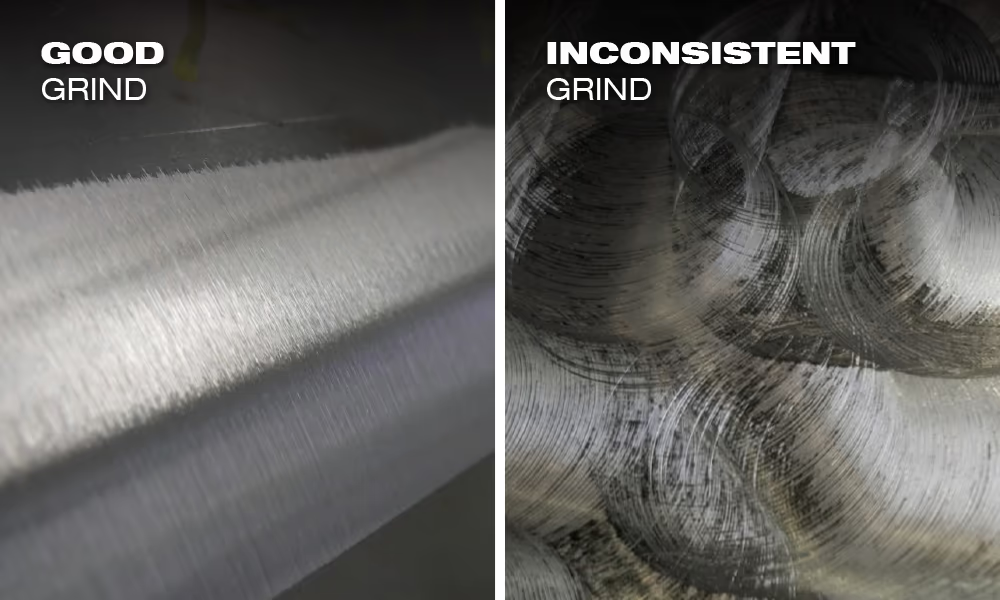
Maintaining consistent surface quality is one of the hardest parts of grinding automation. Robots excel at repeatability, but when it comes to surface finish, even the smallest variable can cause visible changes over time. Without feedback, the cell will keep repeating the same motion even as the abrasive dulls or the torque drops, leading to inconsistent results. Unlike a human operator who instinctively adjusts pressure or angle, a robot needs a closed-loop system to recognize and correct those changes automatically.
Consistent vs inconsistent grinding surface quality can make all the difference
Defining surface targets such as Ra/Rz, grit sequence, and edge radius helps make the process measurable and repeatable instead of subjective. Yet even with these standards, consistent contact pressure is what ultimately keeps finishes stable.
“The finish is so subjective… there is nobody telling us what a good grind is. That’s why we bring customers into our lab to see the process, compare sample parts, and tell us, ‘Yeah, that’s a good part.” – Maximiliano Falcone, PushCorp.
PushCorp’s active-compliance devices and force-controlled spindles maintain that pressure in real time, adjusting independently of the robot arm to compensate for tool wear and surface variation. The result is predictable finish quality across thousands of parts, reduced abrasive waste, and fewer interruptions for inspection or rework.
3. Selection of the Right Spindle and Abrasive
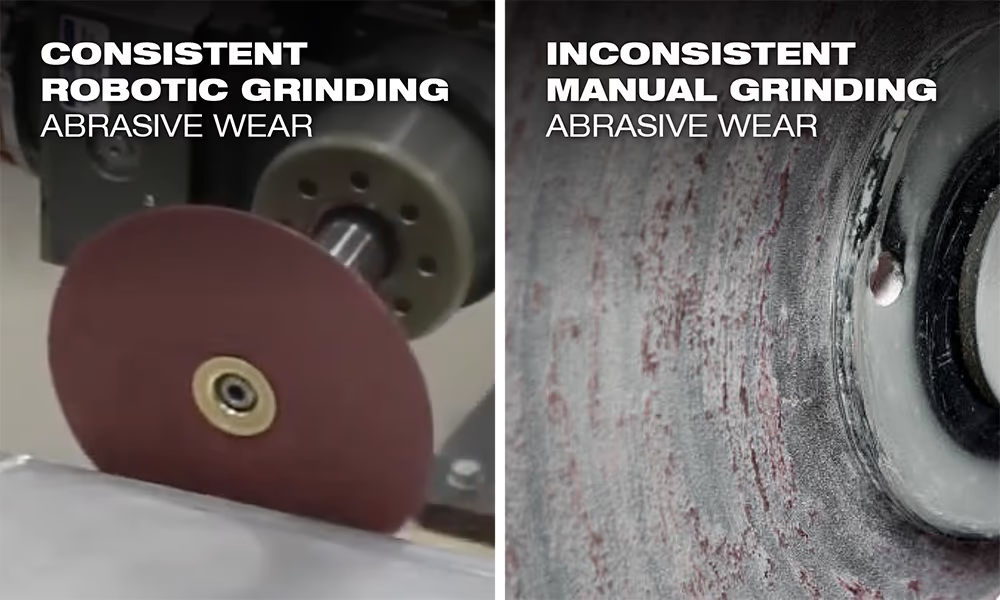
The wrong abrasive or spindle setup can make an automated cell inefficient before it even starts. Abrasives that seem to “cut faster” in manual grinding often fail in automation. They overheat, wear out early, and create inconsistent results. Softer media may protect the surface but clog quickly and force frequent changeovers. Both drive up cost and downtime.
Abrasive wear consistency with robotic vs manual grinding
A productive grinding cell begins with data, not assumptions. Each variable affects performance differently, and only controlled testing reveals the true sweet spot. Key factors include:
Material: hardness, coatings, and heat sensitivity change removal rate.
Pressure: too low wastes time; too high overheats or distorts the part.
Speed: spindle RPM and feed rate determine cut quality and abrasive wear.
Dwell time: longer contact improves finish but shortens media life.
PushCorp’s in-house robotic test lab runs these evaluations for customers, comparing multiple media types under identical conditions to pinpoint the best balance between finish quality and consumable life. The outcome is a data-backed abrasive recommendation, not guesswork. Predictable wear data also supports preventive maintenance scheduling and accurate cost forecasting. With consistent monitoring, automation performs just as reliably on part 500 as it did on part one.
“A robot with our equipment on it is going to use the abrasive more efficiently. It’s going to last longer because we can apply more pressure and use that disc better.” – Maximiliano Falcone, PushCorp.
4. Complexity of Programming and Integration
Programming is where many grinding automation projects stall. High-mix, low-volume production often feels incompatible with robotics because every part seems to require a new path. The key is simplifying what the robot has to do. Reducing path complexity, reusing proven templates, and using offline programming (OLP) tools let you create new programs without stopping the cell.
Using proper compliance tooling reduces programming complexity. Since the compliance allows the grinding wheel to physically adjust to the part, you don’t need to re-adjust the programming path for all surface variations. This saves significant time and programming effort.
For short production runs, programming must be fast, intuitive, and hands-on. Operators should be able to teach paths or make small edits without writing code or waiting on engineering. Variable-stroke tools handle minor contour changes automatically, reducing path points and simplifying programming.
Common integration mistakes can quickly erode ROI, including:
Mismatched I/O between the robot and tooling
Poor dust control that affects reliability and safety
Unsafe layouts or inadequate guarding that delay certification
Because grinding automation isn’t as widespread as welding automation, experience is critical. Many small and midsize manufacturers are tackling robotic grinding for the first time, and experienced support makes all the difference.
“I think what really sets us apart from our competition is our responsiveness. People are always surprised at how quickly we get back to them and we get back to them with the information they need to make decisions and move forward quickly.” – Maximiliano Falcone, PushCorp
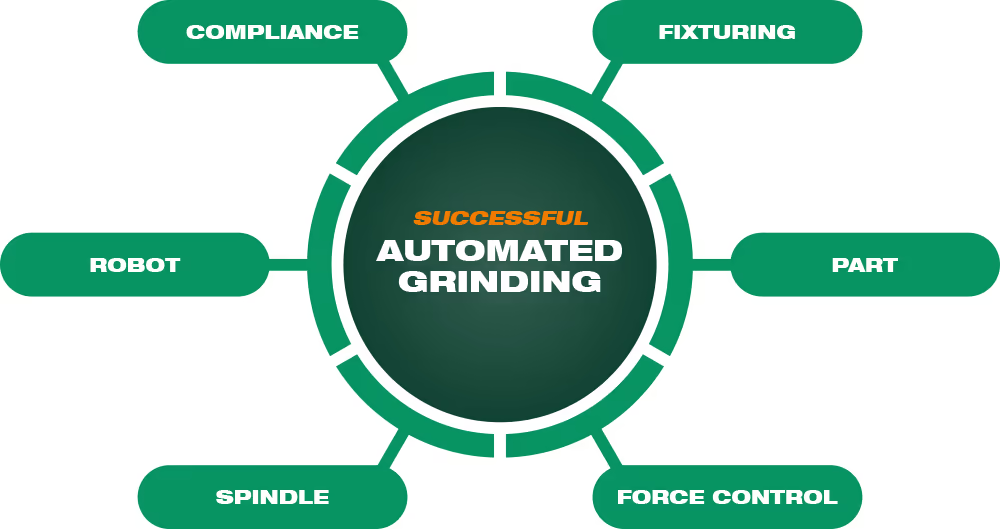
From robot to a finished part, there are several integration layers critical for successful automated grinding
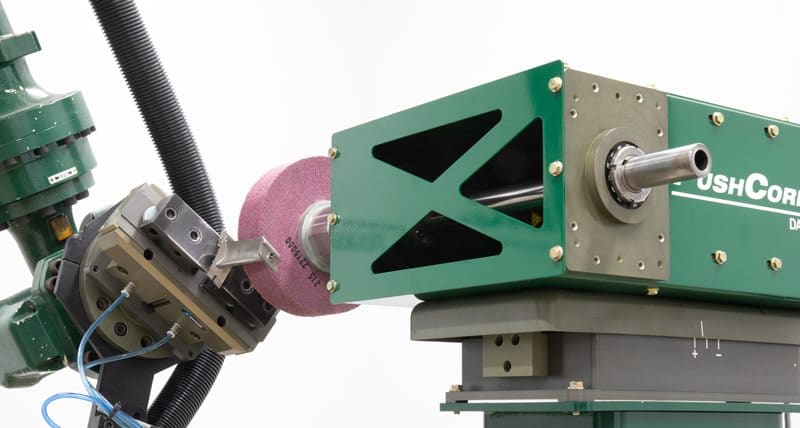
PushCorp simplifies integration with end-of-arm tooling packages designed specifically for robotic material removal. Each package includes spindles, force compliance devices, and mounting interfaces that work together.
See how PushCorp helped Expedition One easily automate the grinding process of bumpers. They cut down time from 60-90 minutes to about 8-10 minutes. And the system works at the push of a button, and the robot just starts.
5. Managing the Safety Risks in Grinding Automation
Manual grinding exposes workers to vibration, high noise, and airborne dust. Automation moves those hazards inside the cell, where proper safety design becomes critical. The enclosure must be built for spark containment, filtration, and airflow to control dust and prevent fire risk. Robots also introduce new motion hazards that require interlocked guarding, presence sensors, and defined safety zones to protect operators during loading and maintenance.
Every grinding automation project should begin with a formal safety risk assessment to identify potential hazards and document mitigations. This is a requirement under ISO 10218:2025, which sets global standards for the design, integration, and validation of robot systems. The standard emphasizes that safety must be engineered into the entire system and verified through testing and documentation.
Every grinding and sanding cells must meet these same requirements, with task-specific validation to ensure speeds, forces, and contact areas remain within safe limits for human interaction.
Consistent, force-controlled contact further reduces risk by preventing abrasive breakage and flying debris. With clear maintenance access, lockout procedures, and proper operator training, automated grinding cells create a safer working environment. This moves employees away from repetitive, high-risk manual grinding and into higher-value roles in inspection, programming, and quality control.
Is Your Process Ready for Grinding Automation?
Grinding automation works best when key process elements are already stable. Robots can’t correct inconsistent inputs, so success depends on predictable conditions. You’ll need high-quality, reliable fixtures and relatively stable upstream processes.
If parts have excessive variations among them, automating their grinding will have inconsistent results. However, compliance devices allow some part variability as they allow the spindle to have an operating range. PushCorp’s compliance devices support up to +/- 20mm of linear stroke (total range 40mm), reducing the programming challenges of automating parts with inconsistencies.
When these fundamentals are in place, automation becomes far easier to integrate, maintain, and scale. Grinding then shifts from a variable process to a predictable, high-output operation.
Measuring the Real ROI of Grinding Automation
Automated grinding delivers measurable stability across every part and every shift. By applying the same force and path every time, robots reduce scrap, improve cycle predictability, and minimize consumable waste. Consistent finishes also mean fewer reworks, tighter schedules, and smoother downstream operations.
The financial return goes beyond labor savings.
When media wear is tracked by data, maintenance becomes planned instead of reactive, extending tool life and keeping production on pace.
Fewer injuries and less fatigue lower turnover costs.
And consistent throughput boosts capacity without adding headcount.
Over time, the combined impact of quality, uptime, and workforce stability produces a faster, more reliable ROI. Grinding automation ultimately shifts the conversation from short-term cost to long-term performance and growth.
Validate Before You Automate
Weld grinding is one of the toughest processes to standardize. Weld size, bead height, and part geometry all vary, making it difficult for manual operators to maintain a uniform finish. Automation solves that variability, but only when it’s engineered around real weld conditions. The right force control, fixturing, and abrasive selection determine how consistently a cell can adapt to uneven seams and material buildup.
That’s why PushCorp focuses on proof before investment. In our demo lab, engineers run real customer parts to measure finish quality, abrasive wear, and cycle time under production conditions. The data shows exactly how automation will perform in your shop, before you commit to full-scale integration.
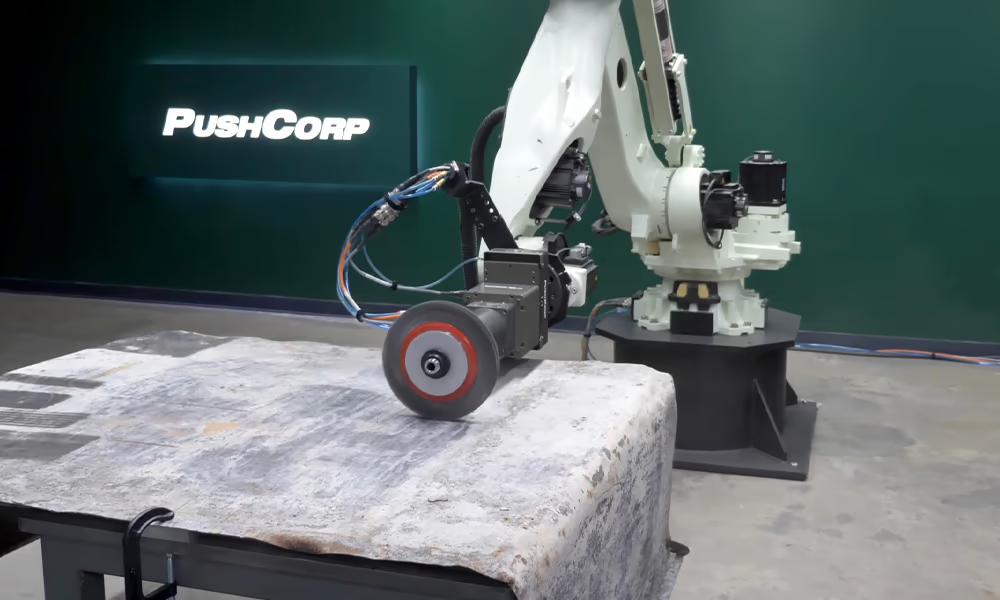
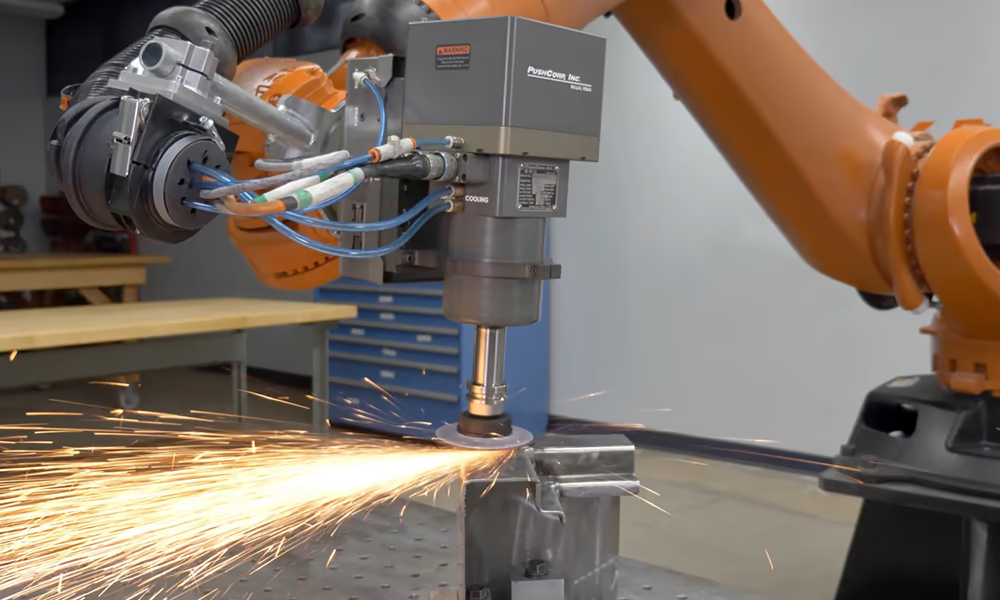
PushCorp end-of-arm grinding tooling in action
Ready to take the next step? Contact PushCorp to speak with an applications engineer and explore the best combination of GrindX active-compliance tooling and XSeries systems to make your grinding operation consistent, safe, and production-ready.
Material Removal Cobots Replace Risk with Consistency
Grinding, sanding, and weld removal often lead to part variation caused by human fatigue or uneven pressure. Material removal cobots change that. These collaborative robots…
10 Insider Tips Every First-Time FABTECH Attendee Needs to Know
So, you’re heading to FABTECH for the first time—congratulations! Whether you’re a seasoned pro in the manufacturing world or just getting your feet wet, attending…
One of the biggest benefits of robotic automation is improved consistency. Robots follow highly repeatable motion paths, which means robotic processing avoids the variability seen…
Grinding Robots Market and Key Trends Manufacturers Must Watch
If you can’t hire enough grinders, keep finishes consistent, or hit ship dates, you’re not alone. Manual grinding is struggling to keep pace with modern…
Achieving a Superior Brushed Metal Finish on Brass Door Handles: Techniques and Tools
Finishing is one of the most critical steps in the manufacturing process, as it directly influences the perception and quality of the end product. Whether…
One of the biggest benefits of robotic automation is improved consistency. Robots follow highly repeatable motion paths, which means robotic processing avoids the variability seen…