1.972.840.0208Discuss with Our Engineers
Top 5 Sanding Automation Problems How Solve Them

Top 5 Sanding Automation Problems (and How to Solve Them)

Many SMMs explore sanding automation to ease labor strain, improve quality, or reduce ergonomic risk. However, the moment they shift from manual to automated sanding, hidden issues surface. Part variation, dust levels, force control, and abrasive selection all have a bigger impact on automated workflows than most shops expect.

Let’s break down the most common sanding automation problems and share practical steps to help you decide when automation fits your parts, your layout, and your production mix.
1. The Wrong Robotic System for High-Mix, Low-Volume Work

Many sanding cells struggle because the layout was built around manual work. Robots need predictable part flow, so a rigid setup becomes a bottleneck in high mix production.

The Mismatch Problem

Large industrial robots can be the right choice when long reach, heavy parts, or high stiffness are required. They can also take more space than some SMMs have available. The mistake is picking a robot based on size rather than application.

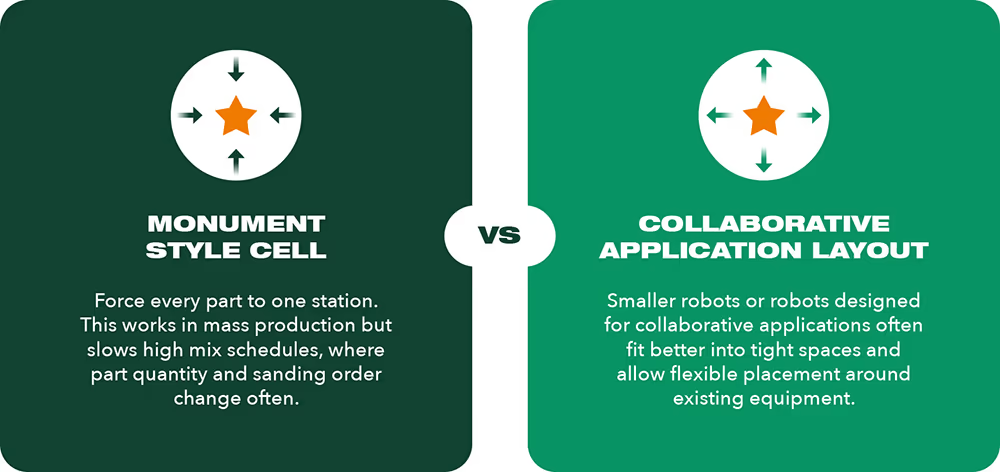
Monument-style cells force every part to one station. This works in mass production but slows high mix schedules, where part quantity and sanding order change often.

Monument Cell vs Collaborative Application Layout
Monument vs collaborative/mobile application layout

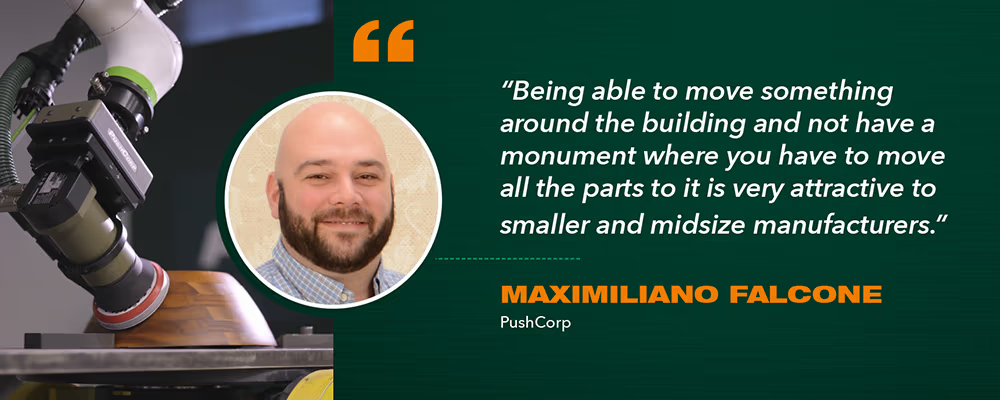
Smaller And Mobile Robots Work Better for SMMs

High-mix environments need layouts that match the work pace. Smaller robots or robots designed for collaborative applications often fit better into tight spaces and allow flexible placement around existing equipment. 

Some shops bring the sanding tool closer to the upstream work so parts do not need to travel across the building. Many also rely on simple modular fixture plates instead of large dedicated machinery that only fits one product line. These choices let the cell adapt without major redesigns.

Smaller Mobile Robots Work Better SMMs

Tooling Built To Match Robotic Application Needs

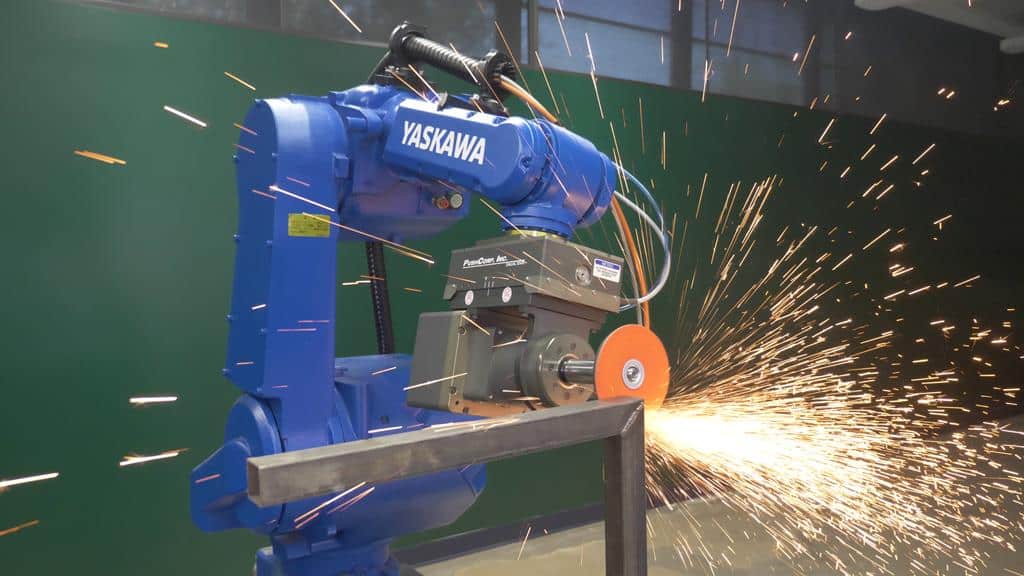
PushCorp designs tools for all major robot platforms, from large industrial arms to the smaller, collaborative robot applications common in SMM shops. Compact spindles and compliance devices fit tight footprints and keep systems lightweight.

2. Inconsistent Surface Finishes

Automated sanding can deliver consistent results, but only when force, speed, and finish standards stay stable. Manual operators adjust pressure by feel, which hides part variation. A robot cannot do that. If the process is not defined or controlled, you get inconsistent surfaces, premature tool wear, or over-sanded areas that need rework.

Why Finish Consistency Fails

Many problems show up as soon as the first parts run:

  • Manual sanding hides variation because operators adjust pressure based on experience.
  • A robot exposes force, speed, and geometry issues right away.
  • Many shops cannot explain what “good enough” means. They may not have a clear Ra target, scratch pattern, or grit path.

When finish quality is not clearly defined, the robot simply reproduces that uncertainty at scale and turns small inconsistencies into large batches of rework.

Good vs Bad Sanding Finish
The automated sanding process must be set for consistency, or you’ll never achieve results comparable to manual sanding

Core Solution: Predictable, Controlled Force

Robots need stable force and consistent spindle behavior to produce matching parts. A compliance device helps control pressure even when parts are slightly warped or uneven. A steady spindle speed keeps the abrasive cutting as it wears, and controlled pressure prevents flat spots, burning, or over-removal. 

Best Practices

Shops that succeed with automated sanding usually:

  • Create finish samples early to align engineers and quality teams.
  • Define grit sequences before programming.
  • Bring quality into testing instead of waiting until the cell is built.

These steps allow robot programming that consistently achieves a clear finish target.

Compliance Devices Provide Human-Like Adaptability

PushCorp’s compliance devices let the tool “float,” maintaining steady pressure even when a part isn’t perfectly uniform. The carriage moves within a controlled stroke range, which absorbs small height changes and prevents over- or under-sanding. The device also outputs real-time data, like carriage position, so integrators can adjust pressure and speed with confidence. This makes the sanding process far more consistent than relying on a rigid mount.

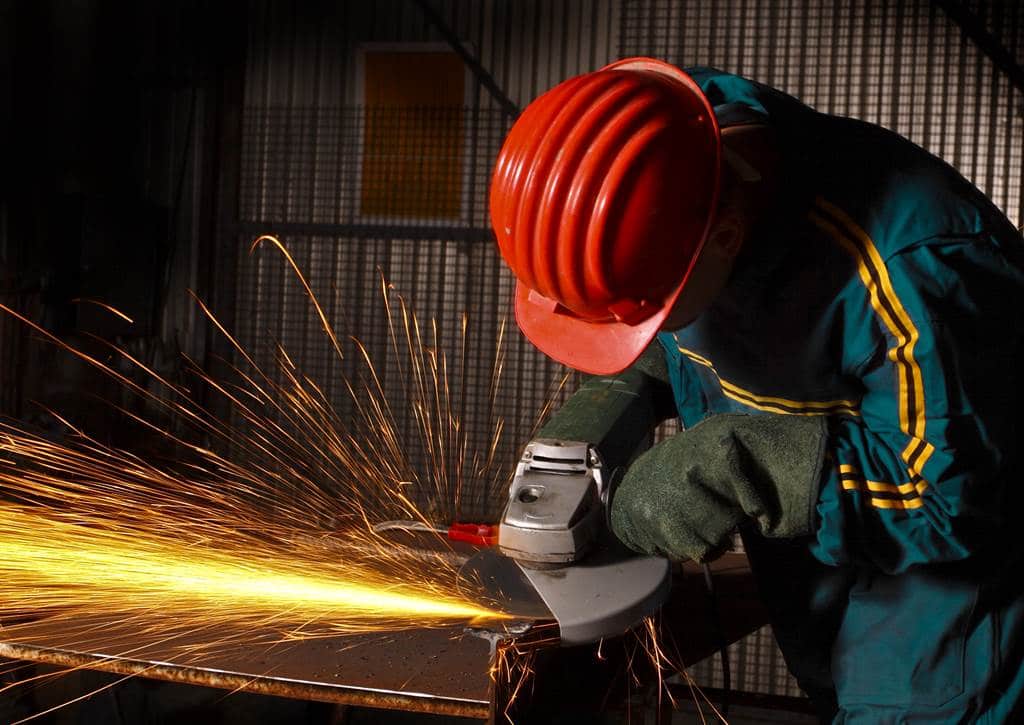
What Manual Grinding Is Costing You

3. Parts and Fixtures Not Designed for Automation

Many sanding automation projects fall apart before they even start. The issue is not the robot or the tool. It is the part itself. When a part has no clear locating surface or varies from batch to batch, the sanding path becomes impossible to repeat.

Why Fixturing Becomes a Roadblock

Several common problems show up in high mix environments:

  • Parts designed for manual work rely on visual alignment and hand control, not defined datums.
  • Castings and weldments often lack flat surfaces or consistent geometry.
  • High mix shops avoid custom fixtures because they are expensive and only work for one SKU. That choice makes sense financially but introduces repeatability issues.

Without a stable way to locate the part, the robot cannot apply force in the right place or maintain a consistent path.

Ways To Handle Variation

Shops that succeed with sanding automation usually start simple:

  • Use basic locators such as pins, nest corners, or two-point stops.
  • Let the compliance device handle small dimensional differences instead of over-engineering the fixture.
  • Build modular base plates that can be reconfigured for different part families.

These steps create enough repeatability for the robot to work without locking the shop into high fixture costs.

PushCorp Compliance Device
Compliance devices adjust to design inefficiencies in real time, allowing consistent force application

“Legacy parts were never designed for automation. They were meant to be picked up, turned, and worked by hand, so there’s no reliable way to locate or hold them. That’s why the compliance device matters. It adjusts for those design inefficiencies.” Maximiliano Falcone, PushCorp

“Design for Automation” Light Approach

A full redesign is not realistic for most SMMs, but small steps help:

  1. Add a simple locating tab or edge when feasible.
  2. Standardize how operators load parts to avoid orientation mistakes.
  3. Improve one part family first, then expand the changes across product lines.

This keeps costs low while improving consistency.

Engineering Support That Simplifies Fixturing Decisions

PushCorp’s sales engineers help evaluate fixture options and identify workable strategies. In the in-house robot lab, real customer parts are tested to confirm feasibility and reduce risk before a shop commits to a full system.

4. Dust, Cross-Contamination, and Safety Risks

Automated sanding creates more consistent output than manual work, but it also produces more dust in less time. A person slows down when they get tired or when visibility drops. A robot does not. It keeps running at the same pace, which means dust levels rise faster and reach areas that may never have been a problem before.

Combustible Dust Concerns

Some materials create real safety risks if the dust is not controlled. Aluminum is a common example. When sanded, it produces fine, dry dust that can be highly combustible. The problem grows when dust settles in corners or when airflow is not designed to handle continuous sanding. What feels like a minor housekeeping issue can turn into a safety problem once throughput increases.

“Aluminum is a very fine dust that is highly explosive. If you’re creating fine aluminum dust and a bunch of it piles up in a corner, you get some static electricity or lightning hits the building and bad things happen fast.”Maximiliano Falcone, PushCorp

Cross-Contamination Problems

Mixing materials in the same sanding area can create unexpected quality issues. If steel and aluminum share the same media or work zone, steel particles can embed into aluminum. Those particles later rust and cause returns or scrap, even if the aluminum itself was fine.

Practical Mitigations

Shops can reduce these risks with a few simple steps:

  1. Use dedicated abrasive paths for different materials.
  2. Keep work areas separated when switching metals.
  3. Maintain a clean work zone and prevent dust buildup.

These actions help protect both finish quality and worker safety.

Force Control Prevents Over-Sanding and Excess Dust

PushCorp’s controlled-force tools limit unnecessary material removal, which reduces dust at the source. Their process development support helps identify safe sanding conditions and avoid setups that create excess debris or contamination.

PushCorp Force Compliance
Animation of PushCorp compliance device showing the allowed movement range to adapt to part deviations

5. Poor Abrasive Selection and Wear Management

Robots need the right abrasive and a consistent sequence to produce matching surfaces. When shops mix abrasive types or rely on guesswork, the robot may remove too much material or leave an uneven finish. The wrong abrasive can cut too aggressively, glaze over, or burn the surface, and automated sanding cannot compensate for those issues. 

That is why abrasives must be treated as engineered process inputs, not consumables chosen by habit.

Optimizing Abrasives

Shops achieve better, more consistent results when they choose abrasives intentionally. Selecting media based on material type and the target finish is more reliable than using whatever happens to be on hand. This is particularly important with automated sanding.

Grit progression also needs to be consistent during programming. A robot follows the sequence exactly as written, so the abrasive path must be defined before the process starts. 

It is also essential to validate abrasive choices on real equipment. Testing on a robot shows how the media cuts, loads, and wears under actual pressure and speed.

Managing Wear in Robotic Sanding

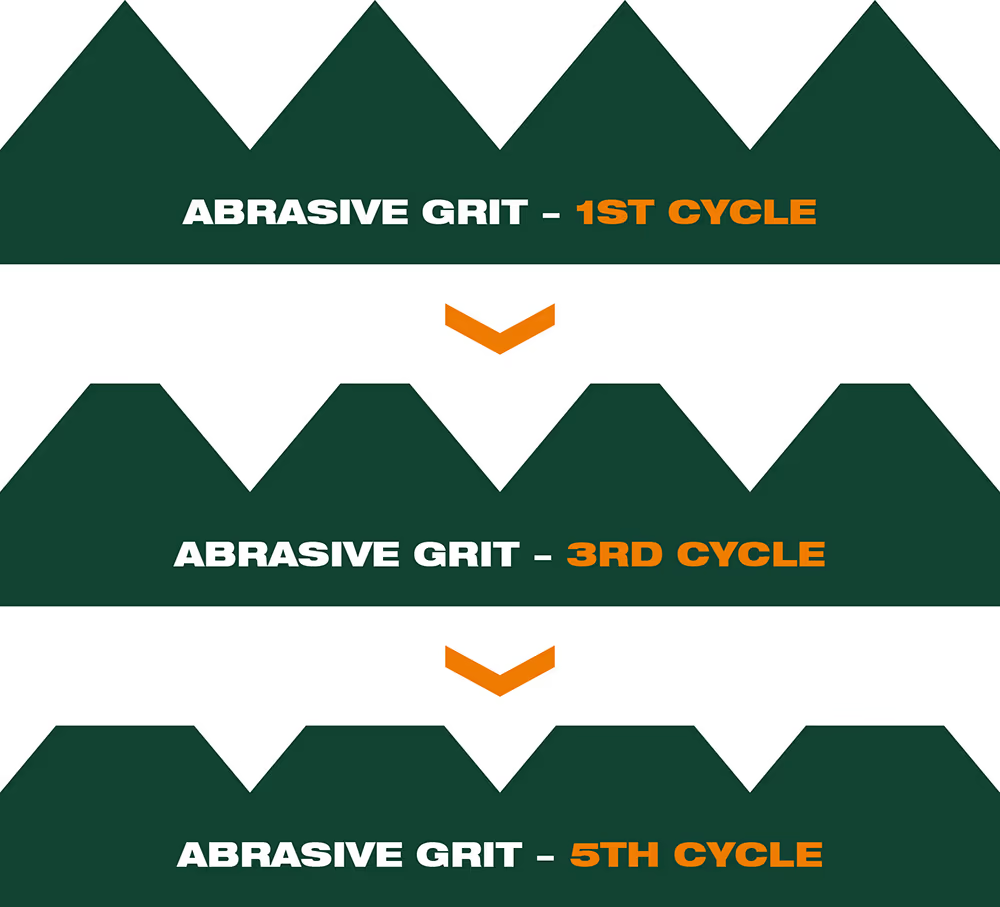
Abrasives lose performance over time, and the robot needs a plan for when to change them. Many shops track wear by cycle count or by watching how the finish changes. Feedback from force or spindle load can also indicate when a disc or belt is nearing the end of its useful life. Higher volume shops may benefit from scheduled changeout intervals so the robot never runs with worn media.

Abrasive Life
Abrasives lose effectiveness over time. Accounting for their wear is critical in automated sanding applications

Lab Validation That Removes Guesswork

PushCorp tests customer parts on multiple in-house robots to define the right abrasive sequence and force settings. PushCorp SandX™ relies on controlled force and stable spindle behavior so abrasives perform predictably from the start.

PushCorp Compliance Device
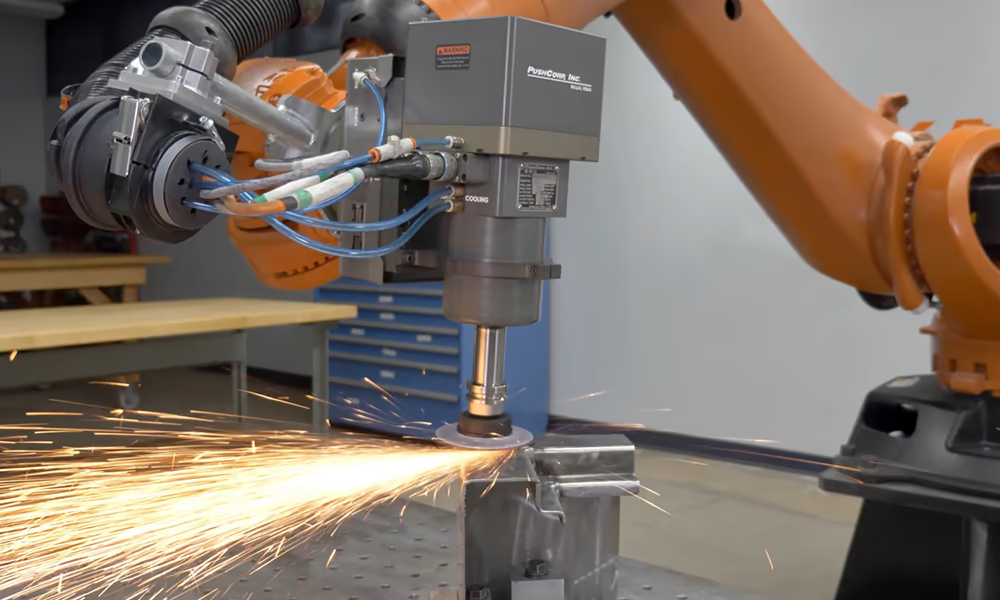
PushCorp automated sanding end-of-arm tooling in action

Start Small And Fix the Right Problems

Sanding automation works when the fundamentals are in place. Controlled force, stable fixtures, clean dust management, and the right abrasives matter more than buying a big, complicated system. Many SMMs only need a small, flexible automation solution to get meaningful results. When you test early with a partner who understands sanding, you avoid guesswork and uncover the real process changes that matter. Even a simple sanding station can prove ROI quickly and lay the groundwork for automating more finishing work in the future.

Sanding automation works best when you can see real results. PushCorp gives you that clarity. Our applications engineers can review your sanding challenges, run your parts in the demo lab, and show how controlled force, abrasive paths, and tooling perform under real conditions.

If you want to explore what sanding automation could look like in your shop, contact our applications team. We can help you select the right tools, set process parameters, and build a path toward consistent, scalable sanding for small and midsize manufacturers.

What Manual Grinding Is Costing You

For over 30 years, our products have helped customers automate applications that were once considered impossible to do with a robot.

Discuss with our Engineers